Why Fremont's 1960s copper
gets pinholes
If you own a house in Mission San Jose, Irvington or Centerville built between 1955 and 1975, this is the leak you'll eventually meet. Here's what causes it and what to do before it finds the ceiling.
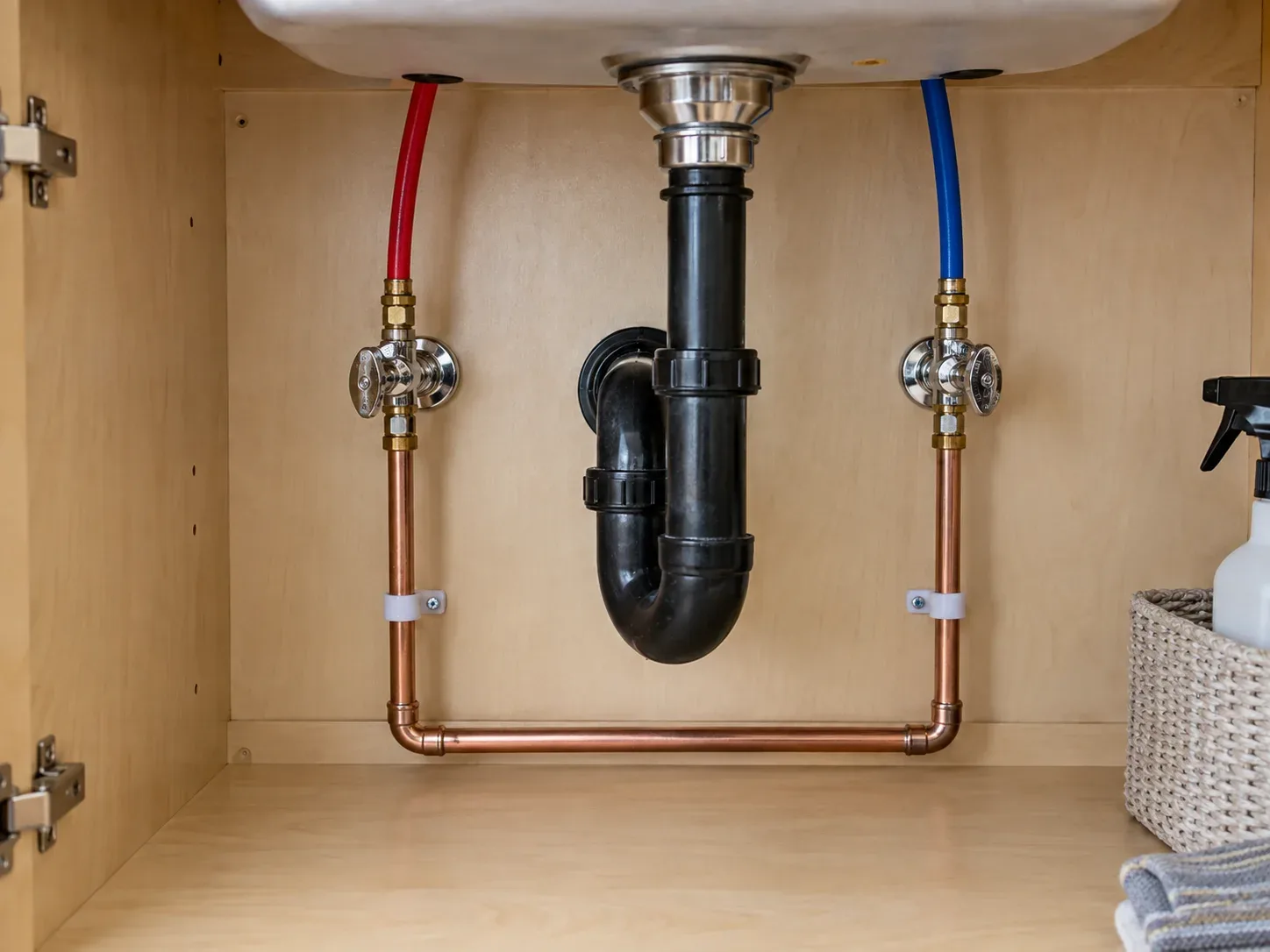
A pinhole leak is exactly what it sounds like: a hole the width of a pin in the wall of a copper pipe, usually on the bottom of a horizontal run. It drips, not sprays, which is why it can run for months behind drywall before anyone notices.
Three reasons it happens here
- Thin-wall copper. Many tract homes of the era used type M, the thinnest grade. Less wall, less time before corrosion gets through.
- Water chemistry. Our water is hard and slightly aggressive to copper; over decades it pits the inside of the pipe.
- Velocity. Undersized hot-water lines move water fast, and fast water scours the pipe wall at every elbow.
What it looks like before it leaks
Green or blue-white crust on a joint. A faint musty smell in a cabinet. A water bill that drifts up over a year. A warm spot on a floor over a slab. None of these are emergencies; all of them deserve a meter test.
Repair, reroute or repipe
- One pinhole on an otherwise sound run: cut it out and sweat in new copper. An hour.
- Second pinhole in two years: the pipe is telling you something. We reroute that run in PEX.
- Three or more, or steel somewhere in the house: a whole-house repipe is cheaper than chasing leaks, and it's four days.
If you want a second opinion on a leak you've been told needs the slab opened, call. The meter test is free with any visit.