Journal · EV · 5 min
48 amps, 6 gauge, one visit: what an EV charger install actually involves.
The circuit, the breaker, the permit and the one question that decides whether you need a new panel first.
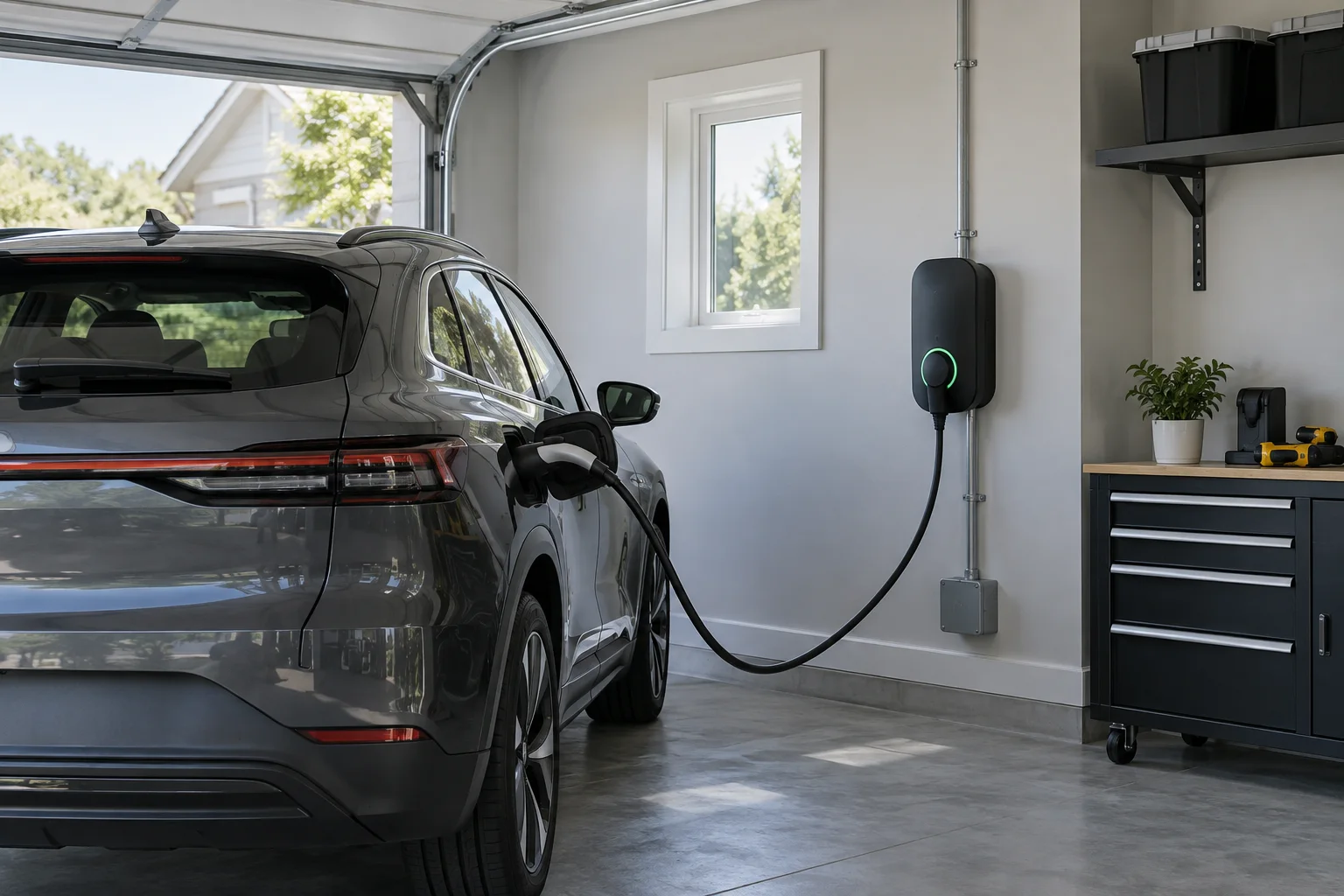
A Level 2 charger at 48 A moves about 11.5 kW into the car, roughly 35 miles of range an hour. Here is everything between the breaker and the plug.
The circuit
A 60 A two-pole breaker (chargers are continuous loads, so the circuit is sized at 125 percent of 48 A). 6 AWG copper, in conduit along a garage wall or NM-B through the attic. A hardwired charger, or a NEMA 14-50 receptacle on a GFCI breaker if you want to take the charger with you.
The one question
Can the panel carry it? We run the load calculation on the walk. Three outcomes: yes; yes with a load-managing charger that throttles when the oven is on; or a panel upgrade first. We give you the number, not a guess.
The visit
- Morning: breaker in, conduit run, charger mounted at the height that suits your charge port.
- Midday: terminated, tested, the car plugged in to confirm the handshake.
- Afternoon: inspection booked, charger registered with your utility EV rate.
Permits
Sunnyvale issues most EV permits online, often the same day. Inspection is a short visit; the inspector checks the breaker size, the conductor and the labeling.
Next: a site walk.
Forty minutes at your panel. We leave you a written scope, the permit path and a start date. Prices come after the walk, never before.
Or call (408) 555-0147 to confirm availability. Visits are by arrangement.